
What this is and what it argues
McKinsey projects that generative AI could boost operating profits in fashion, apparel, and luxury by $275 billion by 2028. This year, 92% of fashion executives intend to increase their AI investment, yet only 1% report having mature deployments. On top of that, 90% of pilots fail to scale.
These figures illustrate a sector that is overfunded, under-deployed, and rarely audited. Size AI, with over 1 million measurements captured by more than 10,000 fashion sellers, presents an audit detailing where funds were allocated in 2026, where they ideally should have been directed, and what this disparity indicates for the coming 18 months.
This discussion is Part 1. Part 2 will address brand-horizon implications and the 2027 forecast.
The state of fashion AI in 2026
The market for AI in fashion is expanding. Statista forecasts growth from $2.47 billion in 2025 to $9.45 billion by 2030, reflecting a 39.8% compound annual growth rate. Business of Fashion reported a 4,700% increase in shopping queries on conversational AI platforms (ChatGPT, Gemini, Perplexity) between 2024 and 2025.
However, adoption remains bimodal. The same McKinsey survey that predicted the $275 billion impact also highlighted a maturity gap, with most brands purchasing licenses, running pilots, but then stalling.
Almost all of the 2026 budget was absorbed by five categories, each warranting a brief overview on what shipped, what stalled, and the significant metrics.
Where the money went on photography
Photography automation emerged as a major success in 2026, becoming a production-ready solution for brands focused on reducing catalog costs.
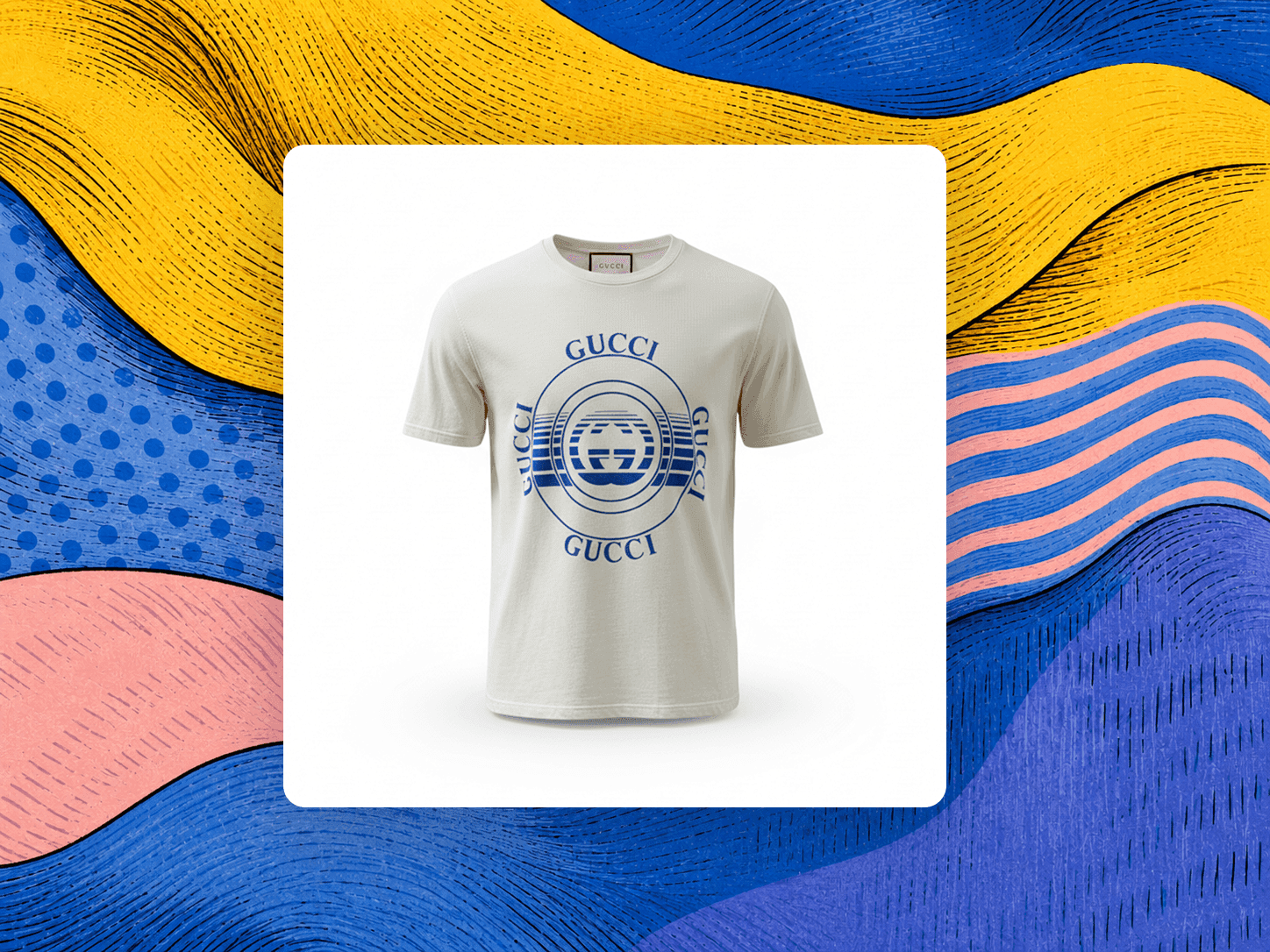
The financial justification is clear. Manual ghost mannequin photography incurs costs of approximately $150 per garment in studio fees and requires 35 minutes of editor time. In contrast, AI desktop tools can generate the same images in 60 seconds for $5 to $15. Mobile-first applications like our AI Photo Studio on the ghost mannequin product page can do this in 15 to 30 seconds using a flat-lay photo without requiring a studio or Photoshop. The iPhone-only process was explained in detail in the ghost mannequin without a mannequin post last week.
| Method | Per garment | Cost per image |
|---|---|---|
| Manual ghost mannequin + Photoshop | 35 min | $150 (studio) |
| AI desktop generation | 60 sec | $5 to $15 |
| Size AI Photo Studio (iPhone LiDAR) | 15 to 30 sec | subscription |
H&M reported savings of 75 to 80% in design and visual content time in February 2026, training over 100 designers on AI-design tools within a quarter. James Peterson, an operations manager at a Size AI client, explained:
We process 200+ items daily. Size AI cut our time by 80%. What used to take our team 5 hours now takes 30 minutes. The consistency across our website catalog is finally where it needs to be. Essential tool for scaling.
The noteworthy aspect of photography in 2026 is not merely the speed. It's the baseline: brands still using studio rentals and human retouchers for catalog photography are doing so for reasons other than cost or quality. The economic debate has been resolved.
Where the money went on fit recommendation
Fit recommendation received substantial funding but delivered the least value.
Initial fit-tech promised a 30 to 40% reduction in returns. Most deployments achieved 2 to 8%. These are structural issues, not implementation flaws that can be patched with upgrades.
Behavior-data inference vendors rely on existing return data. Models remain ineffective on new SKUs until enough returns occur to train them, which is not feasible for seasonal collections or unique items. Survey-based vendors request body measurements at checkout, often resulting in skipped surveys or inaccurate data. Body-scan vendors produce accurate body readings but match them to outdated brand size charts. The real issue lies in the size charts, not the body scans.
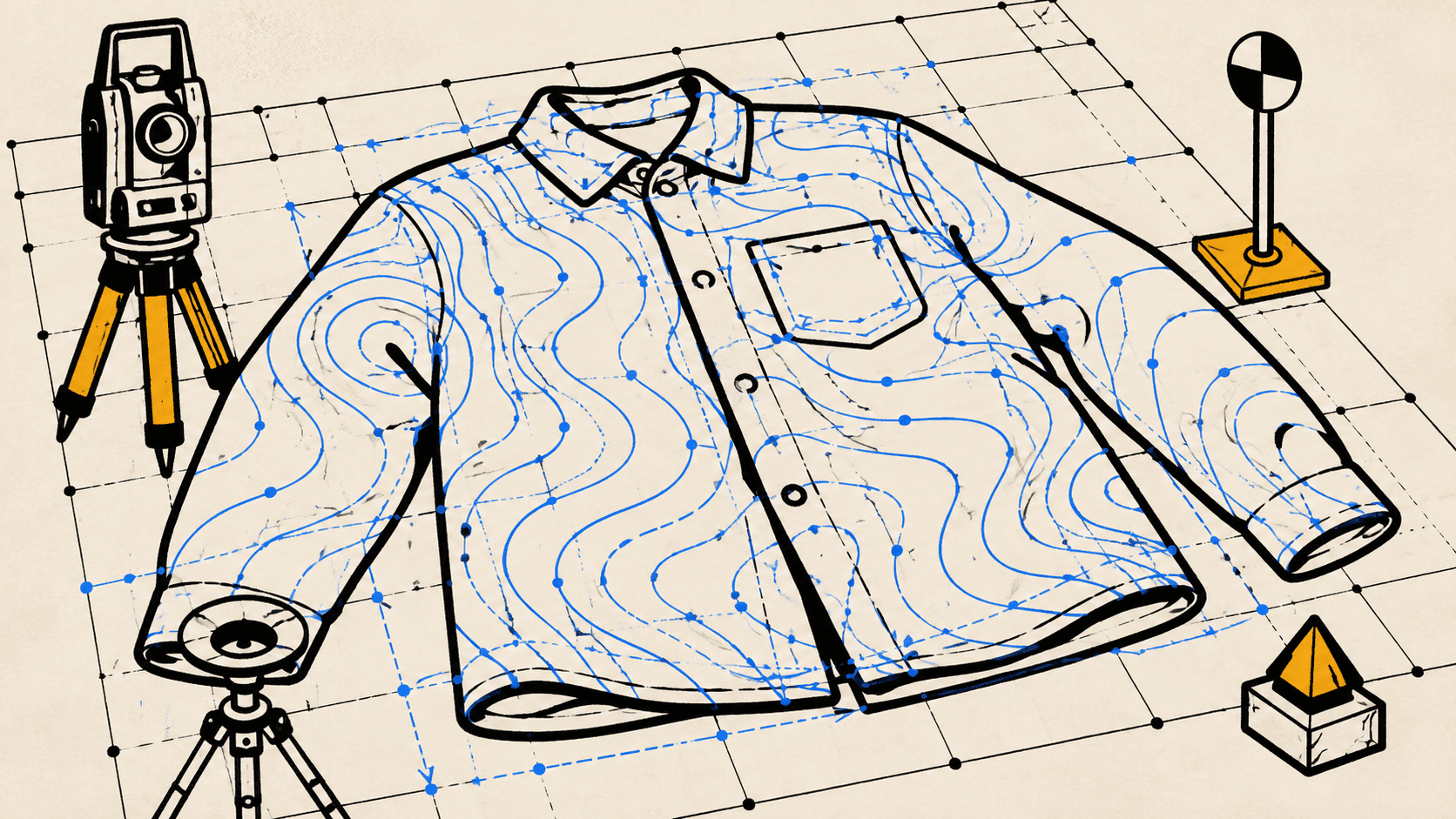
The pervasive failure across the category stemmed from a common oversight: not measuring the garment itself. Shopper data, body data, survey data, and return data attempt to infer garment dimensions without direct measurement. This triangulation has its limits, which became evident in 2026.
Details on the technology required to measure garments at scale using consumer hardware are in our LiDAR pipeline writeup. In essence, it enables 0.92-second on-device captures with ~5 mm (1⁄5") typical accuracy, generating 200-plus structured data points per garment, all on the iPhone.
Where the money went on returns
In the U.S., the returns issue costs approximately $50 billion annually in apparel, with around 24.4% of each order being returned. Half of these returns are generally size-related.
| Approach | Return rate | Source |
|---|---|---|
| Traditional size charts (no AI) | ~24.4% | NRF returns benchmark |
| AI behavior or body inference | 15 to 20% | category mid-band, vendor self-report |
| Garment-data measurement (Size AI) | 5.5% | fashion sellers using Size AI |
The 5.5% return rate comes from more than 10,000 fashion sellers, achieved by measuring at the listing stage instead of relying on returns or surveys. The full analysis is in the fit-related returns playbook.
Returns reduction is the ROI math nobody publishes. McKinsey's $275 billion estimate has to land somewhere: photography automation captures it as cost reduction, fit and returns as margin recovery, and personalization and search as conversion lift. The category that wins 2026 is whichever stops triangulating the garment and starts measuring it.
Where the money went on personalization and search
In 2026, personalization technologies remain unaware of actual garment dimensions. They sort by factors like color, brand, and price, making assumptions about fit. Search relies on keywords such as product name, category, and style, but struggles with fit-specific queries like "find me a midi dress that runs true to size in a 28 inseam."
This gap is set to close over the next 18 months. Agentic commerce queries on platforms like ChatGPT and Gemini saw a 4,700% year-over-year increase. AI agents bypass traditional marketplace searches, relying instead on structured product data. The products favored are those with full fit data. Brands and marketplaces integrating garment data into their catalogs become accessible to AI agents, unlike those depending on size charts and behavioral data.
This represents the opportunity for the next category to expand. Details are on our platform page.
Where it should have gone: the garment-data layer
Redirecting fashion AI investments in the latter half of 2026 is driven by structural rationale.
Photography expenses decrease as automation removes cost. Personalization budgets remain stable due to weak underlying signals. Returns spending rises because the financial recovery potential is substantial. The question remains for fit recommendation spending. The initial vendors promised return reductions but delivered modest improvements. The next wave must address the measurement challenge or risk a repeat of the limited gains.
The garment-data layer should precede other AI investments in fashion. Photography automation improves when the model understands the garment's actual shape. Personalization is more effective when real garment dimensions are a structured field. Returns decrease when customers can compare accurate garment measurements with their own or previous purchases. The garment-data layer isn't just another vendor category. It is the foundational data that all other categories lacked.
For brands considering budget allocations for the latter half of 2026, our brands page outlines the business case. The canonical measurement guide details the data specifications.
First-gen fit-tech vs garment-data: the matrix
A comparison without specifying individual vendors:
| Dimension | Behavior-data inference | Body-scan approach | Survey-based | Garment-data measurement |
|---|---|---|---|---|
| Cold start on new SKU | blind until returns pile up | works after body capture | works at checkout | works on day 1 |
| Drift handling | model retrains slowly | scan persists | survey re-ask | per-SKU capture stays current |
| Accuracy method | infer from purchases | measure customer | self-report | measure garment |
| Brand input dependency | brand size chart required | brand size chart required | brand size chart required | none |
| Returns reduction (typical) | 2 to 8% | 5 to 12% | 3 to 7% | 24.4% to 5.5% |
The takeaway is not that one approach is universally superior. It is that three of the four approaches require the brand's existing size chart to be accurate, and most are not. Garment-data measurement removes the size-chart dependency entirely.
Operators we work with summarize the outcome like this. David Nguyen, a CEO who implemented Size AI extensively, tested 500 items in the first quarter:
We tested Size AI on 500 items and saw immediate results: 45% faster listings, 35% fewer return requests, higher conversion rates. The model shots alone increased our average sale price by 18%.
A 45% workflow improvement, a 35% reduction in returns, and an 18% average order value increase on items measured, photographed, and listed through the Size AI pipeline. This is how budget reallocation manifests in practice.
Part 2 preview
Part 2 will discuss three-horizon brand implications (H1 reseller proof, H2 platform infrastructure, H3 fit intelligence for brands), and the 2027 forecast on agentic commerce, shop-by-fit as a concept, and fit as a searchable database field. It's slated for release in two weeks.
For brands interested in implementation discussions aligned with the 2026 budget cycle, contact our team. To understand Size AI's full role in the fashion stack, see the platform page, which details the SDK and API offerings.