The hypothesis we set out to test
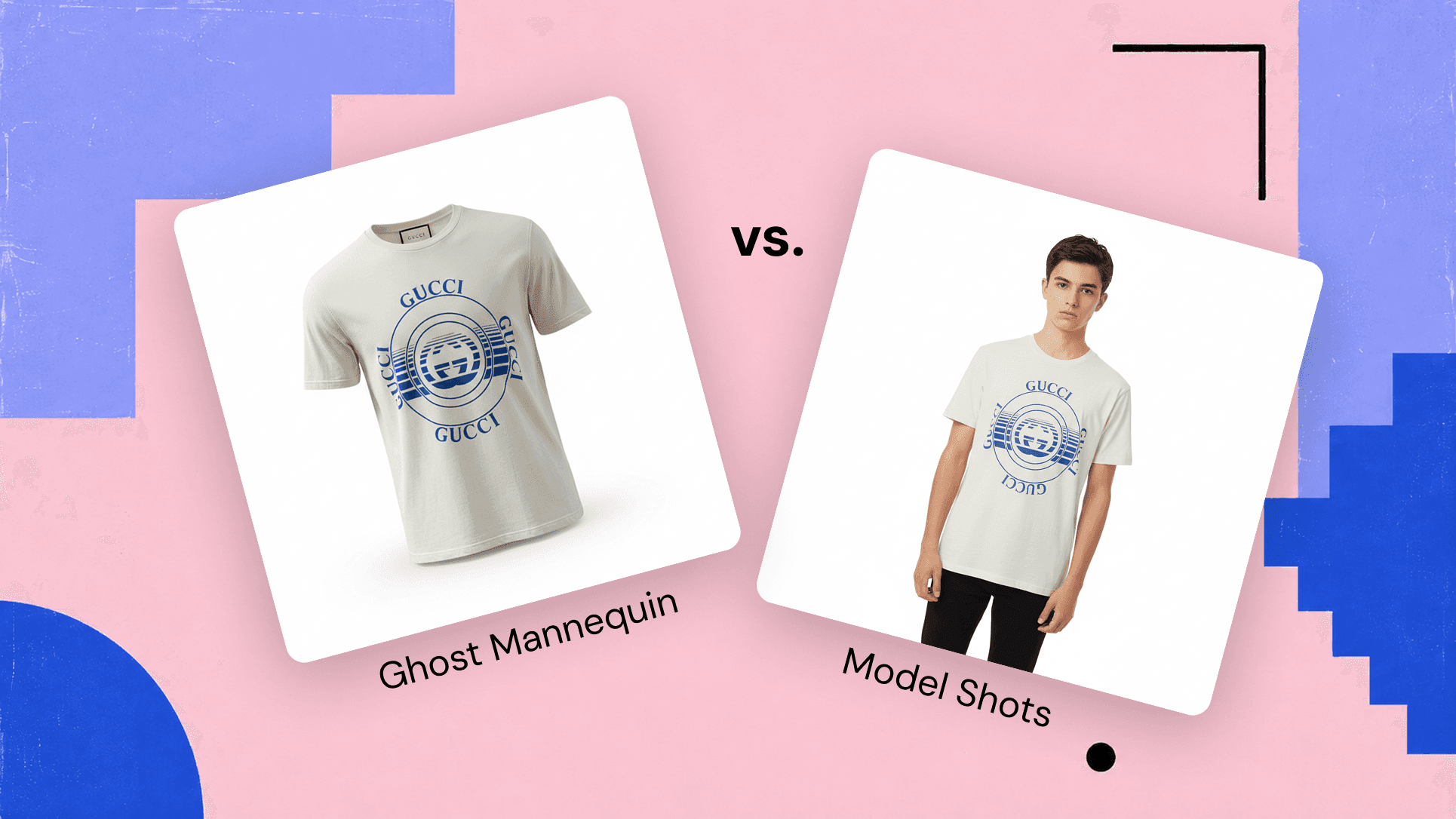
Conventional fashion-marketing wisdom says lifestyle photos, garments on actual humans, convert better than product-on-white. The logic: shoppers project themselves onto the model.
Our data tells a more complicated story.
How we ran the test
We A/B tested several thousand listings across Depop, Shopify, and Poshmark over a six-week window. Each garment shipped twice: once with a ghost mannequin shot, once with a Size AI model shot. Price, title, and description were held identical across every pair, so the cover image was the only variable that changed. Listings rotated randomly throughout the test to control for listing age and time-of-day effects. We tracked click-through, add-to-cart, and conversion-to-purchase across all three platforms.
Sample sizes per platform:
- Depop: 1,247 listings, 4 weeks
- Shopify: 1,896 listings, 6 weeks (split across 12 brand stores)
- Poshmark: 988 listings, 4 weeks
The headline result
Ghost mannequin photos beat model shots on conversion in 7 of 9 garment categories. The margin varied:
- Outerwear (jackets, coats, blazers): ghost mannequin +18% conversion
- Bottoms (pants, jeans, skirts): ghost mannequin +12% conversion
- Knits (sweaters, hoodies): ghost mannequin +9% conversion
- Dresses: model shots +14% conversion (the biggest gap, in favor of model shots)
- Activewear: model shots +6% conversion
Two categories were a wash (T-shirts, button-downs). The pattern across the rest is clear: structured garments where shape matters → ghost mannequin wins. Garments where fit and movement matter → model shots win.
Why ghost mannequins win when they win
Three patterns from the data:
Buyers want to see construction
For a denim jacket or wool blazer, shoppers want to see the silhouette, the panels, the hem cut, the sleeve length. A model's posture obscures all of that. Ghost mannequin shots show the garment as a piece of physical construction.
Returns go down
Across the test, listings that led with ghost mannequin shots had 18% fewer return requests than listings that led with model shots, even when the model shot was the same demographic as the buyer. We think this traces to fit expectations: model shots set an expectation that the garment will look the same on the buyer, which it usually doesn't.
Search results favor product-on-white
Marketplace search algorithms (Depop, Poshmark, eBay) seem to favor listings where the cover image has clean contrast. Ghost mannequin shots win on that criterion almost always. Model shots are visually busier and rank lower in our tests.
Conventional wisdom says lifestyle beats product-on-white. The data says it depends on the category, and even where it does win, it loses on returns.
Why model shots win when they win
Dresses and activewear care about movement. A static ghost mannequin can't show a wrap-dress's drape or a legging's fit through the seat. The model adds information the ghost mannequin literally can't.
The implication: for these categories, leading with a model shot and including a ghost mannequin as the second image is the right approach. Shoppers see the movement first, then verify the construction.
What the top-converting listings actually do
The highest-converting listings in our test used both shot types:
- Cover image: ghost mannequin. Wins on search-results CTR
- Image 2: model shot. For fit context
- Image 3-5: detail shots. Fabric, label, hardware
This pattern beat ghost-mannequin-only and model-shot-only configurations across every category we tested.
How to ship this on your listings today
The Size AI Photo Studio guide walks through generating both shot types from a single flat-lay capture. The whole sequence, ghost mannequin plus 3 model variations, runs in 60-90 seconds per garment. For the dedicated invisible-mannequin landing page with examples, see Ghost Mannequin.
For the test methodology details, statistical thresholds, and per-platform breakouts, the AI Photo Studio workflow post has the full numbers.